Base machine
- Handheld source cabinet, torch, listed control panel and the optical fiber length named on the quotation.
- Standard nozzle set listed for the quoted process; confirm whether wobble heads and cleaning attachments are inside that list.
FACTORY COMPARISON / FIRST ORDER
Compare quotes from up to 3 factories
FREE basic specification and sourcing-requirements review
Eligible first orders may receive up to 3%
Eligibility applies to qualified business buyers and is confirmed after we review your product, quantity, destination, and sourcing requirements. Final savings depend on supplier confirmation, product type and order value.
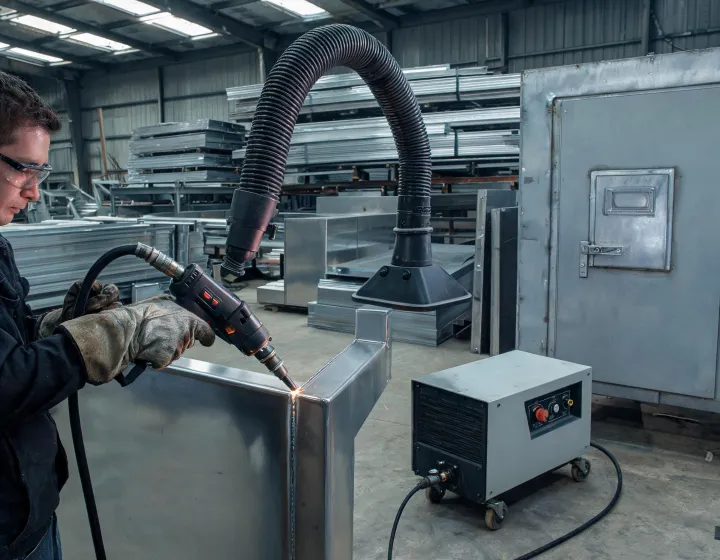
A handheld laser welding machine RFQ is useful when the buyer names the base source, torch kit and which safety and feeding items sit on other lines. We collect those items so factories quote the same envelope instead of unmatched headlines. Read the weld-sample note before treating wattage as a ranking column.
Use the intended alloy, coating and the least accessible production seam as well as an easy straight fillet. A coupon that ignores joint gap does not define the welding trial.
Record laser power in watts, travel, wobble width if used, wire feed if filler is permitted and whether the enclosure interlock package was active. Settings without those notes cannot be compared.
Write pass criteria as distortion, rework and the buyer’s inspection method on the actual joint. Those notes become FAT and SAT language later. See workstation budget notes.
Alloy family, coating, joint gap, thickness combination, filler permission and whether the next SKU is a cosmetic skin or a load-bearing seam. Those changes decide torch, nozzle and power columns, not a single catalog name.
Nozzles matched to the wire diameter, protective windows, liner if a feeder is used and any jig that belongs to the outgoing joint. A shared cabinet does not inherit the last nozzle set.
Inspect the first agreed production seam after the sample settings are restored, using the same distortion and leak or strength method the buyer’s engineering team named—not a torch-on photograph.
The supplier confirms feasibility against the stated sample and lists inclusions. The buyer owns truthful process data, site utilities and engineering acceptance. This intermediary restates the brief and flags gaps; it does not sign FAT.